
“Pulse resides on the fingertips of the Vaidya, not on the radial artery of the client–and Ayurvedic Professionals live on their fingertips!”
– Vaidya Jayarajan Kodikannath
Kerala Ayurveda Academy Director & Lead Faculty teaching Pulse Assessment.
What is pulse assessment?
Pulse Assessment stands as one of the cornerstone diagnostic techniques in both Ayurveda and Traditional Chinese Medicine (TCM), including acupuncture practice. Much like how Western physicians use stethoscopes to listen to the heart or check pulse rates, this ancient method offers practitioners a quick, non-invasive way to evaluate their patients’ health.
In Ayurveda, the practice of reading multiple layers of the pulse—known as Nadi—spans thousands of years. This sophisticated technique allows practitioners to assess an individual’s constitution, detect imbalances, and gain insights into both mental and physical well-being. Classical texts such as the Sharangdhar Samhita reference pulse analysis, while the Yogaratnakar offers detailed descriptions of this diagnostic science, preserving knowledge that has been passed down through generations of traditional Ayurvedic lineage.
It’s worth noting that the emphasis placed on pulse assessment can vary significantly among practitioners and different schools of thought. While some Ayurvedic doctors (Vaidyas) may rely primarily on pulse examination, at Kerala Ayurveda Academy, we train our students to view pulse assessment as one valuable tool within a comprehensive diagnostic toolkit.
Given the frequent inquiries we receive from prospective students about pulse assessment training, we’ve compiled the most common questions and answers below. This guide will help you understand both the capabilities and limitations of pulse assessment, as well as how you might incorporate it effectively into your Ayurvedic practice.

How is pulse assessment practiced?
Picture this scene from a classroom practical: A student sits across from Vaidya Sheena, eyes closed in quiet concentration. After completing a thorough health intake, she’s now having her pulse assessed. As Vaidya Sheena listens to the subtle rhythms beneath her fingertips, she begins to unfold the pulse’s story: the student tends toward overproductivity followed by complete burnout. More specifically, periods of intense activity give way to stretches of being a “couch potato”—often accompanied by binge-watching sessions. Vaidya Sheena also confirms the student’s irritable bowel symptoms, rounding out a remarkably comprehensive assessment drawn solely from the pulse.
The Depth of Information Revealed
The vibrations of the radial artery can unveil seven distinct layers, each offering insights into health status, disorders, and even prognosis. These layers progressively reveal:
- Imbalances (Vikrati)
- Balance of the Subdoshas
- Metabolic fire strength (Agni)
- Toxicity levels (Ama)
- Status of organ systems and tissues (Dhatus)
The deep pulse indicates Prakriti (body constitution)
The Physical Technique
The Ayurvedic professional places three fingers—index, middle, and ring—on the client’s radial artery at the wrist. Each finger reads a different pulse quality: the index finger detects Vata (characterized by a snake-like movement), the middle finger reads Pitta (resembling a frog’s rhythm), and the ring finger feels for Kapha (moving like a swan). These animal comparisons describe the distinct rhythmic patterns each dosha creates.
When to take the pulse
Pulse assessment typically follows the initial health consultation, when the client has settled into a more relaxed state. At this point, the pulse often confirms findings from the intake while potentially revealing additional subtle insights that might have been missed. The extent to which practitioners rely on pulse assessment varies considerably—some Vaidyas use it as their primary diagnostic tool, while others incorporate it more selectively based on their training, experience, and time constraints.

Can a pulse assessment provide all the information needed in an Ayurvedic exam?
Vivian is a quiet teenager sitting alongside his mother for an Ayurvedic consultation (learn more about what happens in an Ayurvedic consultation on our Wellness site). What unfolds feels like the unraveling of his entire life story: daily routines, dietary habits, lifestyle patterns, bowel movements, current ailments, plus his genetic, physical, physiological, psychological, and social history. He sticks out his tongue for examination, displays his nails for inspection, and bursts into laughter when the Vaidya takes his pulse—he’s ticklish!
This comprehensive approach reflects Ayurveda’s fundamental principle: examining the whole person rather than isolated symptoms. The goal is always to identify the root cause of disorder and disease, not merely address surface-level complaints.
Comprehensive Assessment Methods
When someone seeks Ayurvedic care for conditions like IBS or knee pain, practitioners employ standardized assessment protocols. The classical three-step method includes questioning (Prashna), observation (Darshan), and touch (Sparshan)—which encompasses pulse assessment.
Another approach is the eightfold examination (Ashtavidha Pariksha), which evaluates pulse, tongue, eyes, skin, and other key indicators. And another: the ten-step examination incorporates constitutional assessment, current imbalances, age considerations, physical strength evaluation, and additional factors.
These multi-layered assessment methods enable practitioners to understand their client’s complete health picture. This thorough case analysis forms the foundation for comprehensive treatment protocols that may include dietary modifications, lifestyle adjustments, herbal formulations, detoxification recommendations, and structured follow-up care.
Limitations of pulse assessment
While pulse assessment can technically reveal everything needed to understand someone’s constitution and current imbalances, relying exclusively on pulse is neither practical nor necessary. Several scenarios make pulse assessment challenging or impossible:
- Virtual consultations where physical contact isn’t feasible
- Jurisdictions where practitioners are legally restricted from touching clients (regulations vary by state in the U.S.)
- Special circumstances like the COVID-19 pandemic that required social distancing
- Timing issues, such as immediately after meals when pulse reading isn’t recommended
This is precisely why skilled Ayurvedic practitioners utilize the full spectrum of available assessment tools—detailed case history analysis, examination of eyes, nails, and tongue, along with careful observation of overall presentation. This comprehensive approach ensures accurate assessment regardless of circumstances and provides the robust foundation necessary for effective treatment planning.
What are the advantages of pulse diagnosis?
Pulse represents the rhythmical movement of blood as the heart propels it through the arteries. In Ayurvedic practice, interpreting these subtle rhythms provides valuable information about current health status and potential future concerns.
Key advantages of pulse diagnosis include:
- Non-invasive assessment without X-rays, endoscopies, or other invasive procedures
- Quick evaluation of digestive fire (Agni), metabolic function, and immune strength
- Efficient practice tool for identifying imbalances when time is limited
- Holistic insights that integrate both mental and physical health indicators
- Provides insights for early detection of imbalances before they manifest as obvious symptoms
- Diagnostic guidance for determining what additional assessments may be needed
- Preventive insights that help identify and prevent future health issues
- Prognostic information about whether conditions are simple, chronic, or require intensive care
- Root cause identification to expose the causative factors of a disease, helping to map the cause to a management protocol

Want to learn more about Ayurvedic assessment and pulse diagnosis?
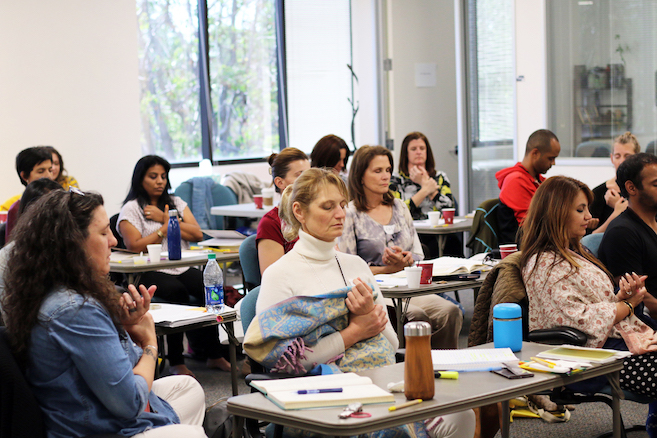
The path to mastering pulse assessment requires dedicated study and extensive practice—and that’s exactly what you’ll experience in our Ayurvedic Assessment & Pulse Diagnosis Workshop. Over three intensive days, you’ll explore comprehensive Ayurvedic assessment techniques, focus specifically on pulse diagnosis, and work with live cases to understand the complete process of mapping health and disease.
This hands-on workshop provides the practical experience essential for developing this ancient diagnostic art under expert guidance.
Learn more about our Ayurvedic Assessment & Pulse Diagnosis Workshop.